What memory do you have of feeling truly loved growing up? Does the memory include receiving stuff? If so, how was that item different then other items you received? If not, what made the memory important and meaningful?
I’m thinking about toys these days. What toys to buy, what not to buy, when to buy them, when to give them, how much to give and what level of hype to put into opening presents. Gift giving can become kind of a lot. Our culture pushes shopping for children and gift giving to children. We seem to equate love with gifts, but not all cultures give excessive amounts of gifts. I’m learning more about this In Christine Gross-Loh’s book, Parenting Without Boarders. The philosophy of Japanese families regarding stuff is healthy.
Gross-Loh talks about the Japanese way of parenting in regards to toys. The culture in Japan is one of simplicity and frugality. These virtues begin with children and follow through with them into adulthood. Reducing, reusing and recycling are all moral ideals that the Japanese embrace. Passing down clothing, forgoing a car purchase to walk/bike places and sending your child to school with a cloth to use for drying hands after washing them are all examples of their simple living. These ideals run along the lines of the Anabaptist ideals of Living More with Less.
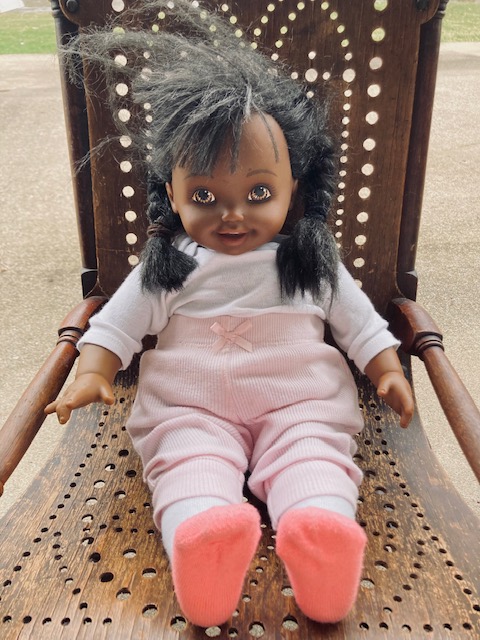
The concept is that the less children have, the more they care well for what they have and the greater their capacity for pretend. I buy this philosophy hook, line and sinker. For Christmas I wanted one gift for our daughter. I wanted a doll that seemed big to her. I wanted large eyes and color on her. Well, while going through the Mennonite Central Committee second hand store, she spotted a lovely doll. I purchased the doll for $5 and she loves it more than anything else she owns.
This reality and the concept of living better with less stuff is inspiring me to go through all the excess toys we’ve acquired and stashed in our spare space. Were these gifts we bought? No. They’re gifts that were given – not new gifts, but stuff that people no longer want. They’re sharing. I love sharing, but people sharing all their old toys is too much. The sharing makes me think of excess garden produce problems. Bear with me here.
Have you ever planted zucchini before? Perhaps you’re a household of two or four and you planted maybe five or six zucchini plants. If you’ve ever made that mistake, then you know what it’s like to have way too much of a good thing. In the Midwest we have a joke about how people don’t sneak to your house to stuff your possessions in bags and steal them away. Instead, they stuff a bag full of produce (likely zucchini), sneak up to your house at night and leave the dreaded extra produce on your step. Now they don’t have to deal with the excess or feel badly about it going rotten. Someone else has to deal with produce. Today feels a bit like that, but the items of interest aren’t vegetables – they’re toys. The problem usually starts with a text.
Today was no different. I received a text. Then it came as a phone call. I was being invited to someone’s house who had “books” they wanted to get rid of. This has happened before. Multiple times, actually, from different households. The family wants to downsize and they’re looking for someone else to take their stuff. Today the call was from the biggest culprit, but she didn’t actually mainly have books she wanted to get rid of. She had toys, but books are more likely the way to draw me in.
I got there and, of course, I didn’t want the toys so we moved on to the books. They weren’t bad books. I took some. And then there was one, singular book that truly grabbed my attention. She decided she wanted to keep that one. 🙂 I came home with more stuff. Ugh. We now have toys stashed in two bedrooms and in the basement. It’s too much. I grew up with a few toys, but I didn’t mind. My childhood was wonderful.
I had friends who were wise and taught me truths that have stuck with me even into adulthood. As I read through Gross-Loh’s book I came across this saying that Japanese parents share with their children, Mono wo daiji ni suru. It means to “take really good care of something.”
It reminds me of my childhood friend, who I’ll refer to as Bina. I had purchased a cheap pair of sandals at a second hand store and she observed me taking them off and throwing them off to the side. She chastised me for not caring for them better. I shrugged and told her it didn’t really matter because I hadn’t spent that much on them and they weren’t very good quality. She furrowed her brow and insisted that “It doesn’t matter how good of quality something is. It matters how well you take care of it.” Little did she know that she was not only instilling in me our Anabaptist values, she was instilling a concept that wise people all the way across the ocean embrace, too.
And if I sit back to think about it, many, many cultures around the world, for many generations have had these values of simplicity and care for your items. It’s just that modern society continues to tell us that to love our children means to give them more, more, more. The secret it out though. It’s a lie. More stuff doesn’t mean more love. And personally, I’d like our child to see and know our love through how we engage with her rather than how many gifts she receives.

 Anabaptist Mama