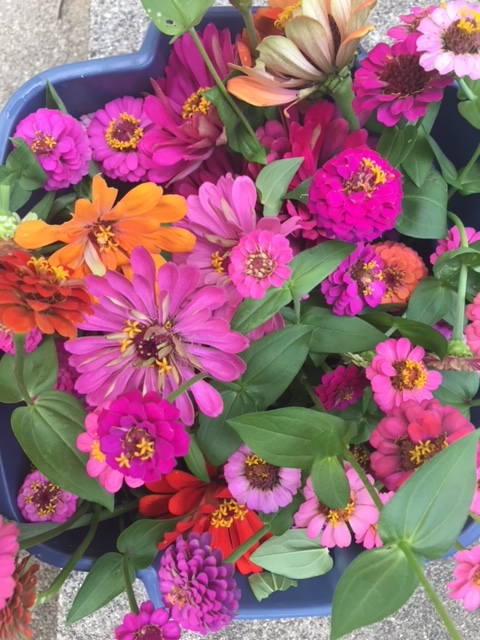
It started innocently enough. I let myself go a little bit here and then a little bit there and suddenly it was like I was out of control. I kept thinking I would stop, but I’d regress. I was gathering so much that I needed to begin problem solving. Where the heck were these things going to go?
Acquiring flowers is one of my weaknesses. This past summer I spent so much time buying flowers, getting flowers from older, wiser women and stealing flowers from along the railroad tracks and from ditches that my husband informed someone in casual conversation that it was an obsession. Well, perhaps, but buying plants for a garden is probably the best kind of obsession one can pursue.
The books I’m reading about parenting in other countries (and in the US) all talk about the importance of children playing outside. What I haven’t read about yet is gardens. I’m a huge fan of outdoor play. I played outside extensively as a child and I had about the happiest childhood one could imagine, but I’m perplexed that gardens aren’t mentioned in these books.
Our Anabaptist tradition is one with long connections to the land. Over the centuries, we were kicked out of land, we were placed on other land, we moved onto land that others were kicked out of, we chose to live on land that others couldn’t cultivate, etc. We worked it. We tilled it. We treated it well, and often, the land gave back to us.
My own parents continued that tradition on a largish-small piece of land. Our hobby farm had everything you could imagine growing in the Midwest: carrots, potatoes, sweet potatoes, onions, corn, okra, tomatoes, peppers, red beets and kale. They also grew fruit: grapes, pears, plums, strawberries, peaches, ground cherries (gross), and for a year or two we had blueberries. I always thought of ourland as the Garden of Eden. It was so lush and productive that when my dad had a man come to till the soil, he was informed that after 25 years of doing this work, our land was some of the healthiest the man had seen in his career. Parents treated it well, soil gave back and children did work!
As a child I spent Saturday mornings weeding the strawberries. I spent hours helping to pick rows of beans, wash them, cut them, can them and finally to carry them down to the basement. I also spent time squishing potato beetles between my fingers and helping my dad lay out pipes to irrigate the large garden, among other tasks.
We didn’t have a lot of money back then and we depended on that garden. Part of the reason I think my sisters and I worked in the garden is because we knew we needed the produce in winter. We understood that piece. What we didn’t understand is that we also needed that time outside. When I think of the amount of hours I spent working outdoors combined with the amount of hours I spent playing out there, I’m impressed. It was multiple hours a day. No wonder I was so happy!
Getting that amount of time outside isn’t as easy now. Gardening isn’t my husband’s favorite hobby. He spent a lot of time weeding when he was young too, but his experience pushed him away from working in the soil. He’s not excited about weeding a bed of kale, and weeding kale alone isn’t exactly exciting to me either. Also, we have money to buy the food we need now so the need to garden vegetables isn’t a strong kickstarter for getting a child to work outdoors.
The next best thing to a vegetable garden? A flower garden. It’s still a lot of weeding, but I find that weeding flowers is more of a joy and I figure this will be enough to get my daughter outside. And that’s where the obsession comes in. I want those flowers in the ground now so that they are coming up when she is old enough to begin appreciating them, and I’m hopeful! Last summer I found myself naturally inclined to check the beds every morning. Of course, I took her with me and I pointed to the new growth we saw. Early on it was a shoot coming from the earth. Later it became the buds off a shoot or perhaps color coming from a bud. Whatever we found, I was always excited and she was certainly attentive.
I recognize that not everyone has a yard. I haven’t always had one. What to do in this situation? Teaching a child to care for an indoor plant seems like a decent task to charge a child with. Or perhaps container gardening is an option. Before I ripped up the grass in our yard, I indulged in experiments with containers on our patio. Some of those experiments were successful and some failed. Another option would be an herb garden, or if you live in the city and don’t have space, try buying seeds and planting them in random areas. You may not be able to water them or tend them as you would if they were in your living space, but you can cultivate curiosity and see if they grow. If they don’t grow, no big deal. Try again next year in a different area. If you do find growth, you can watch and share your joy with others.
The flower gardens I planted will be work, but I hope they’ll be good work. It’s effort that inspires and calls us to work and play in the great outdoors – even when we’re not sure where all the plants are going to fit.

 Anabaptist Mama